Create an account
Welcome! Register for an account
La password verrà inviata via email.
Recupero della password
Recupera la tua password
La password verrà inviata via email.

-
- container colonna1
- Categorie
- #iorestoacasa
- Agenda
- Archeologia
- Architettura
- Arte antica
- Arte contemporanea
- Arte moderna
- Arti performative
- Attualità
- Bandi e concorsi
- Beni culturali
- Cinema
- Contest
- Danza
- Design
- Diritto
- Eventi
- Fiere e manifestazioni
- Film e serie tv
- Formazione
- Fotografia
- Libri ed editoria
- Mercato
- MIC Ministero della Cultura
- Moda
- Musei
- Musica
- Opening
- Personaggi
- Politica e opinioni
- Street Art
- Teatro
- Viaggi
- Categorie
- container colonna2
- Servizi
- Sezioni
- container colonna1


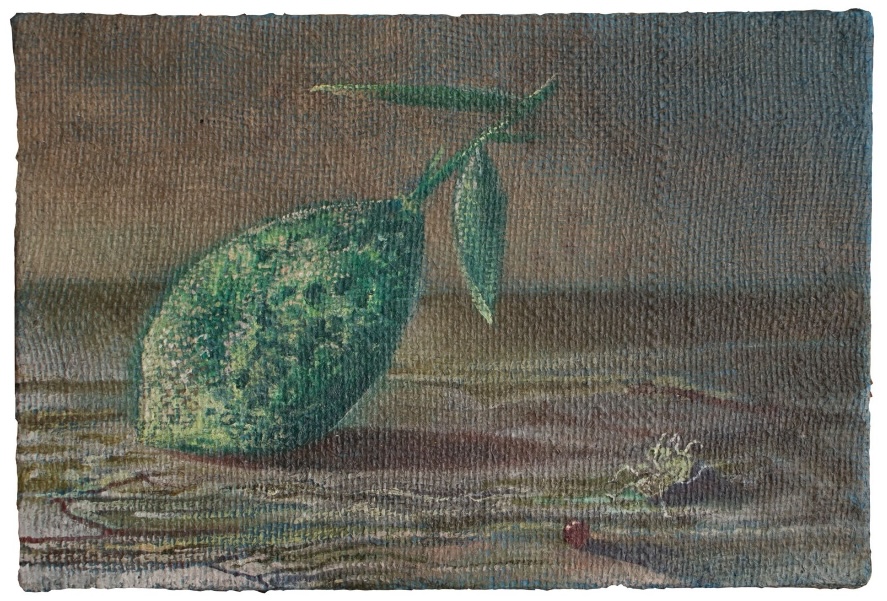
(di) Fronte
Mare Karina presents a group exhibition in the trattoria opposite the gallery, echoing the postwar Venetian tradition of the Fronte Nuovo delle Arti and resonating with the Venice evoked in the Bruno Alfieri exhibition.
Comunicato stampa
Segnala l'evento
The Venetian restaurant model that hosts works by local artists belongs to a longstanding tradition of practices with roots going back to the immediate postwar period in the lagoon. During this time, a network of taverns, trattorias, and restaurants across the city began to serve not only as places for nourishment but also as hubs for exchange, encounters, and cultural debate for the local and international artistic community.
Standing out among these exceptional venues is the story of Ristorante all’Angelo, run by the Carrain family and located in Calle Larga San Marco. It was the place that witnessed both the birth—and shortly after, the demise—of the Fronte Nuovo delle Arti, and for decades remained one of the city’s cultural epicenters, bringing together artists, actors, filmmakers, politicians, and athletes. It is one of those places that tells, more than most, of a specific moment—and perhaps a defining character—of Venice, a city always vibrant and contested in the tension between the local and the global, a tension often softened by the skill of innkeepers and restaurateurs.
Among the many restaurants that rightfully belong to Venice’s artistic history, beyond all’Angelo, one must also recall Harry’s Bar, La Colomba, Martini at the Poste Vecie, and Locanda Montin, among others.
On the occasion of the 19th Venice Architecture Biennale, Mare Karina presents two curatorial projects involving both its gallery spaces and those of the neighboring Trattoria Da Jonny—spaces that, albeit in different ways, are intimately tied to the historical, artistic, and cultural fabric of Venice between the late 1940s and 1960s.
The first is a retrospective dedicated to Bruno Alfieri—publisher and critic, and a proponent of publishing as a multidisciplinary cultural infrastructure—held within the gallery. This serves as both a historical counterpart and reference point for the initiative at the trattoria, where a curatorial action brings together Venetian artists. Their works populate the spaces of the trattoria, forming an ephemeral, temporary constellation—as if these pieces had always belonged there. The project, titled (di) Fronte, gains additional resonance through its connections to the Venice evoked by the Alfieri exhibition.
This tradition of exhibiting in restaurants and trattorias must therefore be seen in relation to its historical precedents, rooted in that postwar desire to reignite artistic and cultural fervor—found fertile ground first and foremost in spaces of conviviality.
The story of Ristorante all’Angelo features none other than Bruno Alfieri and, most notably, his key interlocutor: Giuseppe Marchiori, an art historian and critic. Marchiori was not only the figure with whom Alfieri would engage in an ongoing dialogue—reflected in their editorial and critical work from the late 1940s through the 1980s (as documented by their rich correspondence shown in the exhibition)—but also the undisputed orchestrator of the artistic generation active in Venice at the time.
These restaurants, initially passive backdrops, evolved into active agents within Venice’s cultural scene. Under Marchiori’s direction and with the stage set by all’Angelo and the foresight of the Carrain family, the Fronte Nuovo delle Arti was born in late September 1946, marked by the installation of triptychs in the restaurant’s halls—commissioned by Marchiori from Emilio Vedova, Giuseppe Santomaso, and Armando Pizzinato. In this transformation, restaurateurs themselves became collectors and eventually commissioners.
All’Angelo was also the first landing place for Peggy Guggenheim, for whom Vittorio Carrain would become a trusted figure in Venice. It was at the Carrain restaurant that Guggenheim first met Marchiori, the Fronte artists, and Bruno Alfieri—who, then in his twenties, took charge of publishing the first Venetian presentation of her collection, exhibited in the Greek Pavilion designed by Carlo Scarpa for the 24th Venice Art Biennale.
Restaurants thus became places to “discover” artists, many of whom were regulars, often settling their meals through donations of artworks—a practice so widespread (and observed with curiosity by Guggenheim herself) that it organically led to the formation of true collections.
The Italian artists involved in (di) Fronte all share a direct connection to the city: some were born there, others pass through as students at IUAV or the Academy of Fine Arts, and many live and work there, splitting time between studios in Venice and Mestre. This generational constellation ranges from ages 24 to 36, with roots in Venice, Bassano del Grappa, Conegliano, Scorzè, Piove di Sacco, Treviso, Marostica, Padua, as well as from farther afield: San Benedetto del Tronto, Palermo, and Naples. Each presents small-scale works, primarily engaging with painting, the result of individual research carried out in a Venice that continues to be a laboratory for artistic practice.
The two exhibitions promoted by Mare Karina are part of a broader discourse, sharing the same historical timeframe and offering, in the present, opportunities to spotlight a specific modus operandi—a set of practices that once characterized the artistic sector and cultural dynamics in the city. Today, these practices are revisited and reinterpreted: on one side, through a previously unseen retrospective on a central postwar figure in Venetian culture, and on the other, through the reenactment of an exhibition model that was so defining of the Venetian art scene and that contributed to its cohesion, exchange, and vitality.
Chiara Carrera and Mario Lupano
Standing out among these exceptional venues is the story of Ristorante all’Angelo, run by the Carrain family and located in Calle Larga San Marco. It was the place that witnessed both the birth—and shortly after, the demise—of the Fronte Nuovo delle Arti, and for decades remained one of the city’s cultural epicenters, bringing together artists, actors, filmmakers, politicians, and athletes. It is one of those places that tells, more than most, of a specific moment—and perhaps a defining character—of Venice, a city always vibrant and contested in the tension between the local and the global, a tension often softened by the skill of innkeepers and restaurateurs.
Among the many restaurants that rightfully belong to Venice’s artistic history, beyond all’Angelo, one must also recall Harry’s Bar, La Colomba, Martini at the Poste Vecie, and Locanda Montin, among others.
On the occasion of the 19th Venice Architecture Biennale, Mare Karina presents two curatorial projects involving both its gallery spaces and those of the neighboring Trattoria Da Jonny—spaces that, albeit in different ways, are intimately tied to the historical, artistic, and cultural fabric of Venice between the late 1940s and 1960s.
The first is a retrospective dedicated to Bruno Alfieri—publisher and critic, and a proponent of publishing as a multidisciplinary cultural infrastructure—held within the gallery. This serves as both a historical counterpart and reference point for the initiative at the trattoria, where a curatorial action brings together Venetian artists. Their works populate the spaces of the trattoria, forming an ephemeral, temporary constellation—as if these pieces had always belonged there. The project, titled (di) Fronte, gains additional resonance through its connections to the Venice evoked by the Alfieri exhibition.
This tradition of exhibiting in restaurants and trattorias must therefore be seen in relation to its historical precedents, rooted in that postwar desire to reignite artistic and cultural fervor—found fertile ground first and foremost in spaces of conviviality.
The story of Ristorante all’Angelo features none other than Bruno Alfieri and, most notably, his key interlocutor: Giuseppe Marchiori, an art historian and critic. Marchiori was not only the figure with whom Alfieri would engage in an ongoing dialogue—reflected in their editorial and critical work from the late 1940s through the 1980s (as documented by their rich correspondence shown in the exhibition)—but also the undisputed orchestrator of the artistic generation active in Venice at the time.
These restaurants, initially passive backdrops, evolved into active agents within Venice’s cultural scene. Under Marchiori’s direction and with the stage set by all’Angelo and the foresight of the Carrain family, the Fronte Nuovo delle Arti was born in late September 1946, marked by the installation of triptychs in the restaurant’s halls—commissioned by Marchiori from Emilio Vedova, Giuseppe Santomaso, and Armando Pizzinato. In this transformation, restaurateurs themselves became collectors and eventually commissioners.
All’Angelo was also the first landing place for Peggy Guggenheim, for whom Vittorio Carrain would become a trusted figure in Venice. It was at the Carrain restaurant that Guggenheim first met Marchiori, the Fronte artists, and Bruno Alfieri—who, then in his twenties, took charge of publishing the first Venetian presentation of her collection, exhibited in the Greek Pavilion designed by Carlo Scarpa for the 24th Venice Art Biennale.
Restaurants thus became places to “discover” artists, many of whom were regulars, often settling their meals through donations of artworks—a practice so widespread (and observed with curiosity by Guggenheim herself) that it organically led to the formation of true collections.
The Italian artists involved in (di) Fronte all share a direct connection to the city: some were born there, others pass through as students at IUAV or the Academy of Fine Arts, and many live and work there, splitting time between studios in Venice and Mestre. This generational constellation ranges from ages 24 to 36, with roots in Venice, Bassano del Grappa, Conegliano, Scorzè, Piove di Sacco, Treviso, Marostica, Padua, as well as from farther afield: San Benedetto del Tronto, Palermo, and Naples. Each presents small-scale works, primarily engaging with painting, the result of individual research carried out in a Venice that continues to be a laboratory for artistic practice.
The two exhibitions promoted by Mare Karina are part of a broader discourse, sharing the same historical timeframe and offering, in the present, opportunities to spotlight a specific modus operandi—a set of practices that once characterized the artistic sector and cultural dynamics in the city. Today, these practices are revisited and reinterpreted: on one side, through a previously unseen retrospective on a central postwar figure in Venetian culture, and on the other, through the reenactment of an exhibition model that was so defining of the Venetian art scene and that contributed to its cohesion, exchange, and vitality.
Chiara Carrera and Mario Lupano
03
maggio 2025
(di) Fronte
Dal 03 maggio 2025 al 27 aprile 2026
arte contemporanea
Location
Mare Karina
Venezia, Campo de le Gate, 3200, (VE)
Venezia, Campo de le Gate, 3200, (VE)
Orario di apertura
da martedì a sabato ore 10-13 e 14-18
Vernissage
3 Maggio 2025, 5 maggio 2025, ore 16-18
Autore
Curatore
Autore testo critico
Progetto grafico
Sponsor