Create an account
Welcome! Register for an account
La password verrà inviata via email.
Recupero della password
Recupera la tua password
La password verrà inviata via email.

-
- container colonna1
- Categorie
- #iorestoacasa
- Agenda
- Archeologia
- Architettura
- Arte antica
- Arte contemporanea
- Arte moderna
- Arti performative
- Attualità
- Bandi e concorsi
- Beni culturali
- Cinema
- Contest
- Danza
- Design
- Diritto
- Eventi
- Fiere e manifestazioni
- Film e serie tv
- Formazione
- Fotografia
- Libri ed editoria
- Mercato
- MIC Ministero della Cultura
- Moda
- Musei
- Musica
- Opening
- Personaggi
- Politica e opinioni
- Street Art
- Teatro
- Viaggi
- Categorie
- container colonna2
- Servizi
- Sezioni
- container colonna1



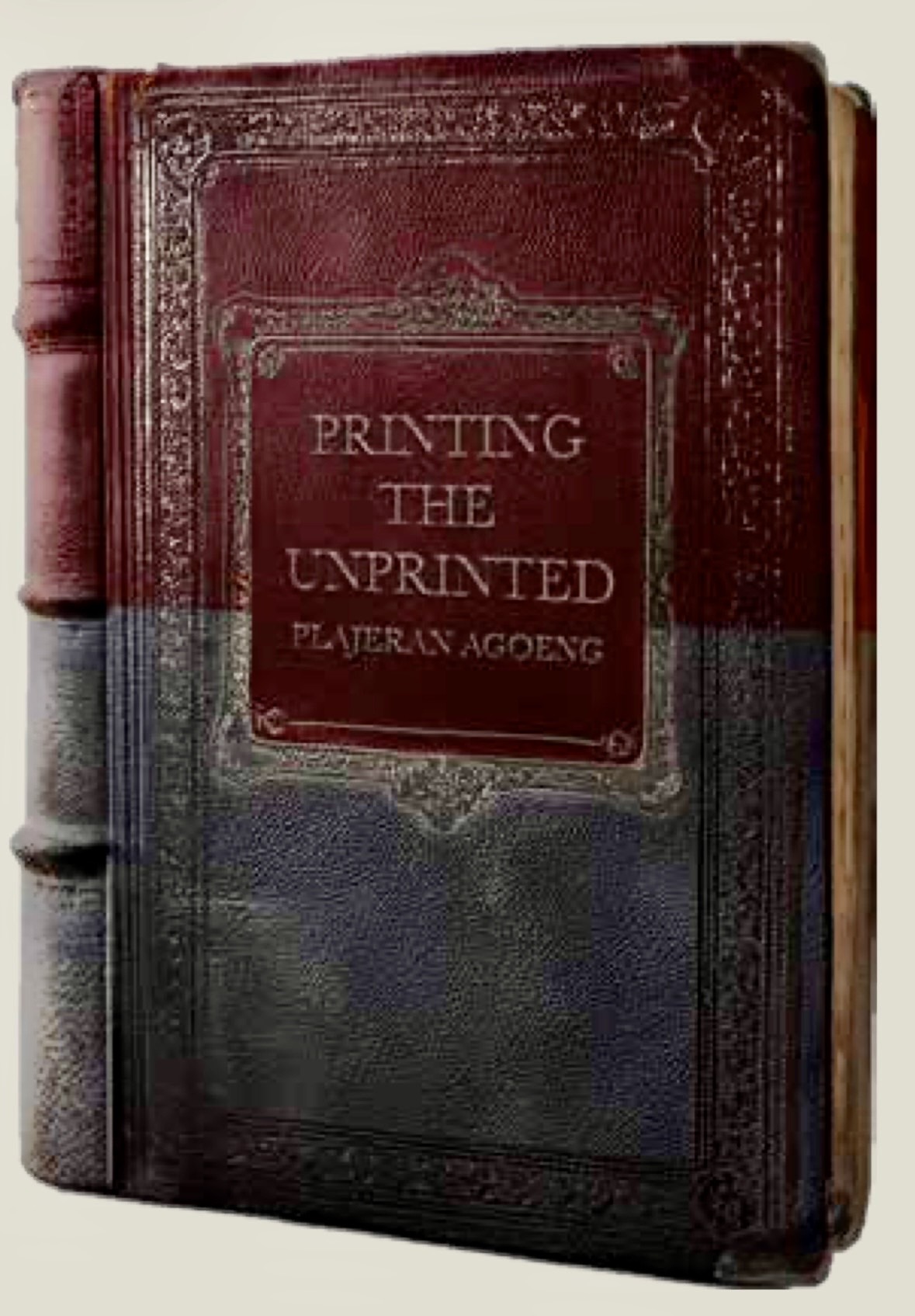
Printing the Unprinted, Indonesian Pavilion, La Biennale di Venezia
The Indonesia Pavilion at the 61st International Art Exhibition – La Biennale di Venezia presents a collaborative project between the Indonesian Ministry of Culture and the Scuola Internazionale di Grafica, Venice, to highlight the central role of printmaking.
Comunicato stampa
Segnala l'evento
The Indonesia Pavilion at the 61st International Art Exhibition – La Biennale di Venezia presents Printing the Unprinted, a collaborative project between the Indonesian Ministry of Culture and the Scuola Inter- nazionale di Grafica, Venice. The Pavilion presents exhibitions, artists-in-residence, art talks, workshops, and a symposium, bringing together seven Indonesian artists from various generations - Agus Suwage (1959), Syarizal Pahlevi (1965), Nurdian Ichsan (1971), R.E. Hartanto (1973), Theresia Agustina Sitompul (1981), Mariam Sofrina (1983), and Rusyan Yasin (1994 - to highlight the central role of printmaking.
The Indonesian Pavilion introduces a ficctional 15th-century voyage inspired by a manuscript attributed to the imagined archivist Datu Na Tolu Hamonangan of Harajaon Pusuk Buhit in Sumatra. Positioned as an influential center of exploration, this kingdom’s narrative highlights its advanced maritime technology, astronomy, trade, governance, and artistry.
The Indonesian Pavilion brings to life an epic 14-year voyage (1472–1486). According to the narrative, the journey sets sail from Lake Toba, navigating to the West Sumatran coast and onward to Malacca, the Bay of Bengal, Gujarat, Hormuz, the Red Sea, Alexandria, and Venice - culminating in Central Europe. Three remarkable ships completed this adventure: Siboru Deak Parujar (Batak Goddess of Creation), the mothership; Naga Padoha (Cosmic Serpent), the escort; and Sahala ni Ombak (Wave Spirit), devoted to scientific discovery. This journey has left a lasting imprint on the world. Datu Na Tolu Hamonangan later chronicled the voyage in his manuscript, Printing the Unprinted: The Great Voyage.
Its leather-bound pages, sometimes described as wood bound, follow a classic Batak pustaha tradition.or centuries, secrets slumbered within: etchings, drawings, sketches, and vivid texts waiting to be discovered.
Later re-examinations of the manuscript have led some scholars to argue that envoys from Harajaon Pusuk Buhit contributed to the development of early modern global knowledge, particularly in ways that remain rele- vant to Asian–European studies. In this interpretation, the “Great Voyage” challenges the long-standing assumption that only European powers undertook and documented global exploration in the 15th century. While
acknowledging the significance of Iberian expeditions, the manuscript suggests that Southeast Asian societies were also engaged in long-distance navigation, legal organization, and transregional observation.
In recent years, renewed interest in the text through publications and translations— has inspired historians, artists, and independent researchers. However, it is unlikely that the Hamonangan manuscript represents the only record of such activity. Some scholars speculate that earlier accounts of diplomatic and commercial exchanges among Nusantara polities may once have existed in royal archives. Whether such materials survive in private collections, were lost over time, or were destroyed through conflict remains uncertain.
Instead of producing works in Indonesia and transporting them to Venice, the artists create their works during a two-month residency in Venice at the Scuola Internazionale di Grafica. This approach situates artistic production within a relational and process-driven context. The Pavilion operates as a living laboratory, emphasizing co-presence, dialogue, and collaboration. Printmaking serves as a shared language, facilitating hybrid forms and collective authorship while preserving individual autonomy.
This process-driven framework fosters an inclusive, intergenerational exchange, pairing seven established artists with seven emerging practitioners. These practitioners are selected through the Negeri Elok and National Talent Management (MTN) initiatives, both dedicated to nurturing artistic talent in Indonesia. The collaboration acknowledges inherited historical and cultural trauma, prompting thoughtful engagement with challenging past events and traditions. Participants employ contemplative practices such as reflection and group discussion, emphasizing care and collective witnessing. The project prioritizes ethical healing through object-making, positioning artistic practice as a means of fostering empathy, mitigating trauma, and building resilience.
In its initial phase, the Indonesian Pavilion hosted an additional residency, welcoming dozens of Indonesian artists who will continue the collaborative process established by earlier participants, thereby rendering the Pavilion’s significance for future approaches.
Commissioned by the Directorate General for Cultural Diplomacy, Promotion, and Cooperation, Ministry of Culture of Indonesia, and supported by the Indonesian Danantara Trust Fund, Printing the Unprinted, curated by Aminudin TH Siregar, runs from May 7 to November 22.
The Indonesian Pavilion introduces a ficctional 15th-century voyage inspired by a manuscript attributed to the imagined archivist Datu Na Tolu Hamonangan of Harajaon Pusuk Buhit in Sumatra. Positioned as an influential center of exploration, this kingdom’s narrative highlights its advanced maritime technology, astronomy, trade, governance, and artistry.
The Indonesian Pavilion brings to life an epic 14-year voyage (1472–1486). According to the narrative, the journey sets sail from Lake Toba, navigating to the West Sumatran coast and onward to Malacca, the Bay of Bengal, Gujarat, Hormuz, the Red Sea, Alexandria, and Venice - culminating in Central Europe. Three remarkable ships completed this adventure: Siboru Deak Parujar (Batak Goddess of Creation), the mothership; Naga Padoha (Cosmic Serpent), the escort; and Sahala ni Ombak (Wave Spirit), devoted to scientific discovery. This journey has left a lasting imprint on the world. Datu Na Tolu Hamonangan later chronicled the voyage in his manuscript, Printing the Unprinted: The Great Voyage.
Its leather-bound pages, sometimes described as wood bound, follow a classic Batak pustaha tradition.or centuries, secrets slumbered within: etchings, drawings, sketches, and vivid texts waiting to be discovered.
Later re-examinations of the manuscript have led some scholars to argue that envoys from Harajaon Pusuk Buhit contributed to the development of early modern global knowledge, particularly in ways that remain rele- vant to Asian–European studies. In this interpretation, the “Great Voyage” challenges the long-standing assumption that only European powers undertook and documented global exploration in the 15th century. While
acknowledging the significance of Iberian expeditions, the manuscript suggests that Southeast Asian societies were also engaged in long-distance navigation, legal organization, and transregional observation.
In recent years, renewed interest in the text through publications and translations— has inspired historians, artists, and independent researchers. However, it is unlikely that the Hamonangan manuscript represents the only record of such activity. Some scholars speculate that earlier accounts of diplomatic and commercial exchanges among Nusantara polities may once have existed in royal archives. Whether such materials survive in private collections, were lost over time, or were destroyed through conflict remains uncertain.
Instead of producing works in Indonesia and transporting them to Venice, the artists create their works during a two-month residency in Venice at the Scuola Internazionale di Grafica. This approach situates artistic production within a relational and process-driven context. The Pavilion operates as a living laboratory, emphasizing co-presence, dialogue, and collaboration. Printmaking serves as a shared language, facilitating hybrid forms and collective authorship while preserving individual autonomy.
This process-driven framework fosters an inclusive, intergenerational exchange, pairing seven established artists with seven emerging practitioners. These practitioners are selected through the Negeri Elok and National Talent Management (MTN) initiatives, both dedicated to nurturing artistic talent in Indonesia. The collaboration acknowledges inherited historical and cultural trauma, prompting thoughtful engagement with challenging past events and traditions. Participants employ contemplative practices such as reflection and group discussion, emphasizing care and collective witnessing. The project prioritizes ethical healing through object-making, positioning artistic practice as a means of fostering empathy, mitigating trauma, and building resilience.
In its initial phase, the Indonesian Pavilion hosted an additional residency, welcoming dozens of Indonesian artists who will continue the collaborative process established by earlier participants, thereby rendering the Pavilion’s significance for future approaches.
Commissioned by the Directorate General for Cultural Diplomacy, Promotion, and Cooperation, Ministry of Culture of Indonesia, and supported by the Indonesian Danantara Trust Fund, Printing the Unprinted, curated by Aminudin TH Siregar, runs from May 7 to November 22.
09
maggio 2026
Printing the Unprinted, Indonesian Pavilion, La Biennale di Venezia
Dal 09 maggio al 22 novembre 2026
arte contemporanea
Location
SCUOLA INTERNAZIONALE DI GRAFICA
Venezia, Cannaregio Calle seconda del Cristo, 1798, (Venezia)
Venezia, Cannaregio Calle seconda del Cristo, 1798, (Venezia)
Orario di apertura
10-17.30
Sito web
Ufficio stampa
VENICE ART FACTORY
Ufficio stampa
SCUOLA INTERNAZIONALE DI GRAFICA
Autore
Curatore
Autore testo critico
Media partner
Produzione organizzazione
Sponsor
Patrocini