Create an account
Welcome! Register for an account
La password verrà inviata via email.
Recupero della password
Recupera la tua password
La password verrà inviata via email.

-
- container colonna1
- Categorie
- #iorestoacasa
- Agenda
- Archeologia
- Architettura
- Arte antica
- Arte contemporanea
- Arte moderna
- Arti performative
- Attualità
- Bandi e concorsi
- Beni culturali
- Cinema
- Contest
- Danza
- Design
- Diritto
- Eventi
- Fiere e manifestazioni
- Film e serie tv
- Formazione
- Fotografia
- Libri ed editoria
- Mercato
- MIC Ministero della Cultura
- Moda
- Musei
- Musica
- Opening
- Personaggi
- Politica e opinioni
- Street Art
- Teatro
- Viaggi
- Categorie
- container colonna2
- Servizi
- Sezioni
- container colonna1



Silvia Giambrone – Lettera delle 8.17
STUDIO STEFANIA MISCETTI presenta la performance ‘Lettera delle 8.17’ di Silvia Giambrone e la pubblicazione ‘Silvia Giambrone, dillo con i fiori’ a cura di Cristiana Perrella. La perfomance prevede l’intervento di Silvia Giambrone e Davide Enia che interpreterannoun testo scritto dall’artista
Comunicato stampa
Condividi l'evento
STUDIO STEFANIA MISCETTI è lieto di presentare la performance inedita Lettera delle 8.17, di Silvia Giambrone e la pubblicazione Silvia Giambrone, dillo con i fiori a cura di Cristiana Perrella, in occasione del finissage della mostra dillo con i fiori.
La perfomance è una evoluzione dell'opera video august 6th mon amour esposta in galleria e prevede l'intervento di due performers, Silvia Giambrone e Davide Enia che interpreteranno un testo scritto dall'artista.
La mostra dillo con i fiori è composta dalla video installazione august 6th, mon amour (2015) e dall’opera inedita dillo con i fiori (2016).
La video installazione august 6th, mon amour – vincitrice nel 2016 del Premio Optima SmartUp – nasce dall'esperienza di un'intervista diretta ad uomo e una donna sopravvissuti allo scoppio della bomba nucleare ad Hiroshima, che l’artista ha incontrato durante un viaggio in Giappone nel 2013.
Per gli Hibakusha - i superstiti dell’olocausto nucleare - l’ordigno non ha mai smesso d’esplodere e, seppure sopravvissuti, le loro vite sono rimaste ferme allo scoppio della bomba. I testimoni, infatti, sono stati costretti a celare di essere stati ad Hiroshima durante e dopo il bombardamento per la paura di essere respinti dalla società che emarginava i potenziali soggetti radioattivi, o a causa della costante minaccia di potersi ammalare e di mettere al mondo figli malati per le radiazioni a cui erano stati esposti.
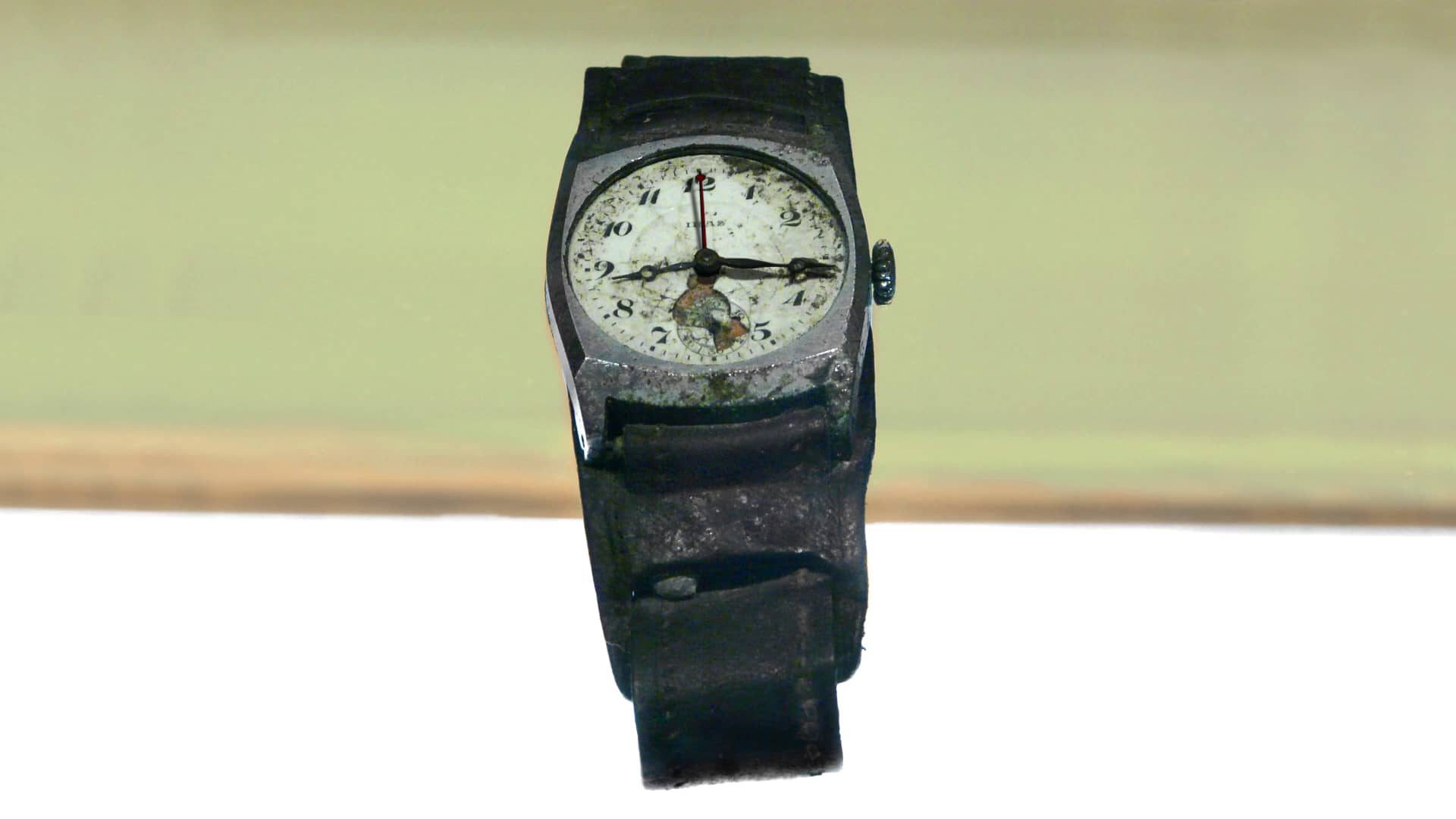
Per questa ragione Silvia Giambrone ha scelto di lavorare sull’immagine dell’orologio ritrovato dopo l’esplosione ed esposto ora al museo della pace di Hiroshima, che riporta l’orario esatto della deflagrazione e di intervenire spostandolo avanti di un minuto e aggiungendo la lancetta dei secondi che oscilla avanti e indietro ininterrottamente, tra passato e futuro.
L’artista racconta un tempo e uno spazio, irrimediabilmente immobili, nei quali la vita degli hibakusha è rimasta intrappolata, sottolineando come il momento più difficile delle loro esistenze non sia stato tanto quello dell'esplosione della bomba quanto il tempo successivo, con la consapevolezza di essere sopravvissuti.
A dare il titolo alla mostra è l’opera inedita dillo con i fiori: margherite che mostrano come la radioattività legata all'incidente di Fukushima, le abbia modificate. I fiori che abitualmente vengono associati all’esplosione vitale e al dono, in questo caso narrano della veste che la natura ha preso per sopravvivere.
I fiori e l’orologio sono oggetti portatori dell’eredità dei fatti tragici che hanno vissuto e, mostrando la loro inevitabile mutazione, enfatizzano la condizione di sopravvivenza a cui la natura e l’uomo sono stati costretti dall'irruzione della Storia nel corso della loro esistenza.
Silvia Giambrone, Agrigento (1981); vive e lavora a Roma. Lavora con video, installazione, scultura, performance, suono.
La sua ricerca è incentrata sulla soggettività e sulla relazione tra corpo, linguaggio e potere. Laureata all'Accademia di Belle Arti di Roma, è tra i fondatori di 26cc
di Roma. Negli ultimi quattro anni partecipa a numerose residenze in Europa e Stati Uniti e viene invitata a diverse conferenze su temi femministi.
Alcune tra le sue mostre più significative includono: Pandora's Boxes, CCCB Museum, Madrid (2009); Eurasia, Mart, Rovereto (2009); Moscow Biennale:
Qui vive?(2010); Flyers, Oncena Biennal de la Havana (2012); Re- Generation, Museo Macro, Roma (2012); Mediterranea 16 (2013); Kaunas Bienale Unitext (2013); Let it go, American Academy in Rome (2013); Let it go, Museo Riso (2014); Silvia Giambrone: Critica in arte, MAR Museum, Ravenna (2014);
Silvia Giambrone: Ciò che non siamo, ciò che non vogliamo, MAG Museum, Riva del Garda (2014); Residenza all'ISCP di New York (2015);
Silvia Giambrone: A terrible love of war, Kaunas Bienale, Lituania (2015); The Body as Language: Women and Performance, Richard Saltoun Gallery, London (2015); ‘Suite Rivolta’, Carla Lonzi’s feminism and the art of revolt, Museu de Electricidade, Doclisboa’s Passages, Lisboa (2015); Every passion borders on the chaotic, Museo Villa Croce, Genova (2016); W Women in Italian Design, Triennale Design Museum, Milano (2016); Archeologia domestica Vol. I, Istituto italiano di cultura, Colonia (2016).
Premi: 2016 Optima SmartUp, Primo premio; 2014 Collectors for Celeste Prize, Primo Premio; 2014 Premio Francesco Fabbri, Menzione Speciale BIM; 2013 Kaunas Biennale, Primo Premio; 2009 Premio Epson, Primo Premio.
********************
STUDIO STEFANIA MISCETTI is delighted to present the original performance Lettera delle 8.17, of Silvia Giambrone and the new publication Silvia Giambrone, dillo con i fiori edited by Cristiana Perrella, during the exhibition's closing night. The performance is an evolution of the video installation august 6th, mon amour exhibited in the gallery and it will be performed by Silvia Giambrone and Davide Enia, who will interpret a text wrote by the artist.
The solo exhibition dillo con i fiori (say it with flowers) comprises the video installation august 6th, mon amour (2015), and taken from the never before seen piece dillo con i fiori (say it with flowers, 2016). Winner of the 2016 Optima SmartUp Prize, the video installation, august 6th, mon amour is borne out of the artist's experience of interviewing a man and woman who survived the nuclear bomb blast in Hiroshima, and whom she met while travelling in Japan in 2013.
For the Hibakushas who survived the nuclear holocaust, the ordeal has never stopped bursting in on their lives; although they survived, their existence has remained caught in the moment of the blast. As witnesses they were forced to conceal the fact that they were in Hiroshima prior to and after the bombardment, for fear of being rejected by a society which marginalised those who were potentially radioactive, and because of the constant risk of falling ill or bringing sick children into the world as a result of the radiation to which they had been exposed. Therein why Silvia Giambrone chose to work on the image of the clock found after the explosion and currently on show at the Hiroshima Peace Museum, which displays the exact time at which the blast struck; her creative intervention moves time forward by one minute, and adds a second hand which endlessly flicks backwards and forwards, caught between past and future.
The artist tells the story of a time and a place – both irrevocably at a standstill – in which the Hibakushas’ lives have remained trapped: she underlines how the hardest moment of their lives was not so much the bomb’s explosion, but everything that came afterwards, with the awareness of having survived.
The exhibition takes its from the never-before-seen piece “dillo con i fiori” (say it with flowers), in which the daisies reveal the effects which the radioactivity produced by the Fukushima disaster has had. Here these flowers, which usually symbolise a gift or an explosion of life, tell a story of the shape nature had taken to survive.
The flowers and the clock are objects which bear testimony to the tragic events they have passed through and, by showing their inevitable mutation, emphasise the nature of the survival to which man and nature have been driven as a result of history breaking into their lives.
Silvia Giambrone was born in 1981. She studied at the Academy of Fine Arts in Rome (2002-2006). She has held residencies throughout Europe and USA over the past four years. Giambrone, who both lives and works in Rome, is also the co-founder of the 26cc artist space in Rome. She uses conceptual art to illustrate her own social commentary with a keen focus on gender politics. Some of her exhibitions include: Pandora's Box, CCCB Museum, Madrid (2009); Eurasia, Mart Museum, Rovereto (2009); Qui vive?, Moscow Biennale of young artists (2010); Under a false name, Spazio13 Foundation, Warsaw (2011); Flyers, Oncena Biennal de la Havana (2012); Regeneration, Macro Museum, Roma (2012); Autoritratti. Iscrizioni del femminile nell’arte italiana contemporanea, MAMbo, Museo d’Arte Moderna di Bologna(2013); Mediterranea 16 (2013); Kaunas Bienale Unitext (2013); Let it go, American Academy in Rome (2013), Let it go, Riso Museum, Palermo (2014), Critica in arte, MAR Museum, Ravenna (2014); Ciò che non siamo, ciò che non vogliamo, MAG Museum (2014), Riva del Garda; A terrible love of war, Kaunas Bienale (2015); The Body as Language: Women and Performance, Richard Saltoun Gallery, London (2015); ‘Suite Rivolta’, Carla Lonzi’s feminism and the art of revolt, Museu de Electricidade, Doclisboa’s Passages, Lisboa (2015); Every passion borders on the chaotic, Museo Villa Croce, Genova (2016); W Women in Italian Design, Triennale Design Museum, Milano (2016); Archeologia domestica Vol. I, Italienisches Kulturinstitut Köln (2016). Awards: 2016 Optima SmartUp, Winner; 2014 Collectors for Celeste Prize, Winner; Francesco Fabbri Prize, Bim Special Mention, Winner; 2013 Kaunas Biennale, Winner; 2010 Razzano Prize, selected; 2009 Premio Epson, Winner; horti2008 Agnelli Foundation, selected.
La perfomance è una evoluzione dell'opera video august 6th mon amour esposta in galleria e prevede l'intervento di due performers, Silvia Giambrone e Davide Enia che interpreteranno un testo scritto dall'artista.
La mostra dillo con i fiori è composta dalla video installazione august 6th, mon amour (2015) e dall’opera inedita dillo con i fiori (2016).
La video installazione august 6th, mon amour – vincitrice nel 2016 del Premio Optima SmartUp – nasce dall'esperienza di un'intervista diretta ad uomo e una donna sopravvissuti allo scoppio della bomba nucleare ad Hiroshima, che l’artista ha incontrato durante un viaggio in Giappone nel 2013.
Per gli Hibakusha - i superstiti dell’olocausto nucleare - l’ordigno non ha mai smesso d’esplodere e, seppure sopravvissuti, le loro vite sono rimaste ferme allo scoppio della bomba. I testimoni, infatti, sono stati costretti a celare di essere stati ad Hiroshima durante e dopo il bombardamento per la paura di essere respinti dalla società che emarginava i potenziali soggetti radioattivi, o a causa della costante minaccia di potersi ammalare e di mettere al mondo figli malati per le radiazioni a cui erano stati esposti.
Per questa ragione Silvia Giambrone ha scelto di lavorare sull’immagine dell’orologio ritrovato dopo l’esplosione ed esposto ora al museo della pace di Hiroshima, che riporta l’orario esatto della deflagrazione e di intervenire spostandolo avanti di un minuto e aggiungendo la lancetta dei secondi che oscilla avanti e indietro ininterrottamente, tra passato e futuro.
L’artista racconta un tempo e uno spazio, irrimediabilmente immobili, nei quali la vita degli hibakusha è rimasta intrappolata, sottolineando come il momento più difficile delle loro esistenze non sia stato tanto quello dell'esplosione della bomba quanto il tempo successivo, con la consapevolezza di essere sopravvissuti.
A dare il titolo alla mostra è l’opera inedita dillo con i fiori: margherite che mostrano come la radioattività legata all'incidente di Fukushima, le abbia modificate. I fiori che abitualmente vengono associati all’esplosione vitale e al dono, in questo caso narrano della veste che la natura ha preso per sopravvivere.
I fiori e l’orologio sono oggetti portatori dell’eredità dei fatti tragici che hanno vissuto e, mostrando la loro inevitabile mutazione, enfatizzano la condizione di sopravvivenza a cui la natura e l’uomo sono stati costretti dall'irruzione della Storia nel corso della loro esistenza.
Silvia Giambrone, Agrigento (1981); vive e lavora a Roma. Lavora con video, installazione, scultura, performance, suono.
La sua ricerca è incentrata sulla soggettività e sulla relazione tra corpo, linguaggio e potere. Laureata all'Accademia di Belle Arti di Roma, è tra i fondatori di 26cc
di Roma. Negli ultimi quattro anni partecipa a numerose residenze in Europa e Stati Uniti e viene invitata a diverse conferenze su temi femministi.
Alcune tra le sue mostre più significative includono: Pandora's Boxes, CCCB Museum, Madrid (2009); Eurasia, Mart, Rovereto (2009); Moscow Biennale:
Qui vive?(2010); Flyers, Oncena Biennal de la Havana (2012); Re- Generation, Museo Macro, Roma (2012); Mediterranea 16 (2013); Kaunas Bienale Unitext (2013); Let it go, American Academy in Rome (2013); Let it go, Museo Riso (2014); Silvia Giambrone: Critica in arte, MAR Museum, Ravenna (2014);
Silvia Giambrone: Ciò che non siamo, ciò che non vogliamo, MAG Museum, Riva del Garda (2014); Residenza all'ISCP di New York (2015);
Silvia Giambrone: A terrible love of war, Kaunas Bienale, Lituania (2015); The Body as Language: Women and Performance, Richard Saltoun Gallery, London (2015); ‘Suite Rivolta’, Carla Lonzi’s feminism and the art of revolt, Museu de Electricidade, Doclisboa’s Passages, Lisboa (2015); Every passion borders on the chaotic, Museo Villa Croce, Genova (2016); W Women in Italian Design, Triennale Design Museum, Milano (2016); Archeologia domestica Vol. I, Istituto italiano di cultura, Colonia (2016).
Premi: 2016 Optima SmartUp, Primo premio; 2014 Collectors for Celeste Prize, Primo Premio; 2014 Premio Francesco Fabbri, Menzione Speciale BIM; 2013 Kaunas Biennale, Primo Premio; 2009 Premio Epson, Primo Premio.
********************
STUDIO STEFANIA MISCETTI is delighted to present the original performance Lettera delle 8.17, of Silvia Giambrone and the new publication Silvia Giambrone, dillo con i fiori edited by Cristiana Perrella, during the exhibition's closing night. The performance is an evolution of the video installation august 6th, mon amour exhibited in the gallery and it will be performed by Silvia Giambrone and Davide Enia, who will interpret a text wrote by the artist.
The solo exhibition dillo con i fiori (say it with flowers) comprises the video installation august 6th, mon amour (2015), and taken from the never before seen piece dillo con i fiori (say it with flowers, 2016). Winner of the 2016 Optima SmartUp Prize, the video installation, august 6th, mon amour is borne out of the artist's experience of interviewing a man and woman who survived the nuclear bomb blast in Hiroshima, and whom she met while travelling in Japan in 2013.
For the Hibakushas who survived the nuclear holocaust, the ordeal has never stopped bursting in on their lives; although they survived, their existence has remained caught in the moment of the blast. As witnesses they were forced to conceal the fact that they were in Hiroshima prior to and after the bombardment, for fear of being rejected by a society which marginalised those who were potentially radioactive, and because of the constant risk of falling ill or bringing sick children into the world as a result of the radiation to which they had been exposed. Therein why Silvia Giambrone chose to work on the image of the clock found after the explosion and currently on show at the Hiroshima Peace Museum, which displays the exact time at which the blast struck; her creative intervention moves time forward by one minute, and adds a second hand which endlessly flicks backwards and forwards, caught between past and future.
The artist tells the story of a time and a place – both irrevocably at a standstill – in which the Hibakushas’ lives have remained trapped: she underlines how the hardest moment of their lives was not so much the bomb’s explosion, but everything that came afterwards, with the awareness of having survived.
The exhibition takes its from the never-before-seen piece “dillo con i fiori” (say it with flowers), in which the daisies reveal the effects which the radioactivity produced by the Fukushima disaster has had. Here these flowers, which usually symbolise a gift or an explosion of life, tell a story of the shape nature had taken to survive.
The flowers and the clock are objects which bear testimony to the tragic events they have passed through and, by showing their inevitable mutation, emphasise the nature of the survival to which man and nature have been driven as a result of history breaking into their lives.
Silvia Giambrone was born in 1981. She studied at the Academy of Fine Arts in Rome (2002-2006). She has held residencies throughout Europe and USA over the past four years. Giambrone, who both lives and works in Rome, is also the co-founder of the 26cc artist space in Rome. She uses conceptual art to illustrate her own social commentary with a keen focus on gender politics. Some of her exhibitions include: Pandora's Box, CCCB Museum, Madrid (2009); Eurasia, Mart Museum, Rovereto (2009); Qui vive?, Moscow Biennale of young artists (2010); Under a false name, Spazio13 Foundation, Warsaw (2011); Flyers, Oncena Biennal de la Havana (2012); Regeneration, Macro Museum, Roma (2012); Autoritratti. Iscrizioni del femminile nell’arte italiana contemporanea, MAMbo, Museo d’Arte Moderna di Bologna(2013); Mediterranea 16 (2013); Kaunas Bienale Unitext (2013); Let it go, American Academy in Rome (2013), Let it go, Riso Museum, Palermo (2014), Critica in arte, MAR Museum, Ravenna (2014); Ciò che non siamo, ciò che non vogliamo, MAG Museum (2014), Riva del Garda; A terrible love of war, Kaunas Bienale (2015); The Body as Language: Women and Performance, Richard Saltoun Gallery, London (2015); ‘Suite Rivolta’, Carla Lonzi’s feminism and the art of revolt, Museu de Electricidade, Doclisboa’s Passages, Lisboa (2015); Every passion borders on the chaotic, Museo Villa Croce, Genova (2016); W Women in Italian Design, Triennale Design Museum, Milano (2016); Archeologia domestica Vol. I, Italienisches Kulturinstitut Köln (2016). Awards: 2016 Optima SmartUp, Winner; 2014 Collectors for Celeste Prize, Winner; Francesco Fabbri Prize, Bim Special Mention, Winner; 2013 Kaunas Biennale, Winner; 2010 Razzano Prize, selected; 2009 Premio Epson, Winner; horti2008 Agnelli Foundation, selected.
06
dicembre 2016
Silvia Giambrone – Lettera delle 8.17
06 dicembre 2016
performance - happening
Location
STUDIO STEFANIA MISCETTI
Roma, Via Delle Mantellate, 14, (Roma)
Roma, Via Delle Mantellate, 14, (Roma)
Orario di apertura
ore 19.00 e 20.00
Vernissage
6 Dicembre 2016, ore 19.00 e 20.00
Autore