

Create an account
Welcome! Register for an account
La password verrà inviata via email.
Recupero della password
Recupera la tua password
La password verrà inviata via email.

-
- container colonna1
- Categorie
- #iorestoacasa
- Agenda
- Archeologia
- Architettura
- Arte antica
- Arte contemporanea
- Arte moderna
- Arti performative
- Attualità
- Bandi e concorsi
- Beni culturali
- Cinema
- Contest
- Danza
- Design
- Diritto
- Eventi
- Fiere e manifestazioni
- Film e serie tv
- Formazione
- Fotografia
- Libri ed editoria
- Mercato
- MIC Ministero della Cultura
- Moda
- Musei
- Musica
- Opening
- Personaggi
- Politica e opinioni
- Street Art
- Teatro
- Viaggi
- Categorie
- container colonna2
- Servizi
- Sezioni
- container colonna1


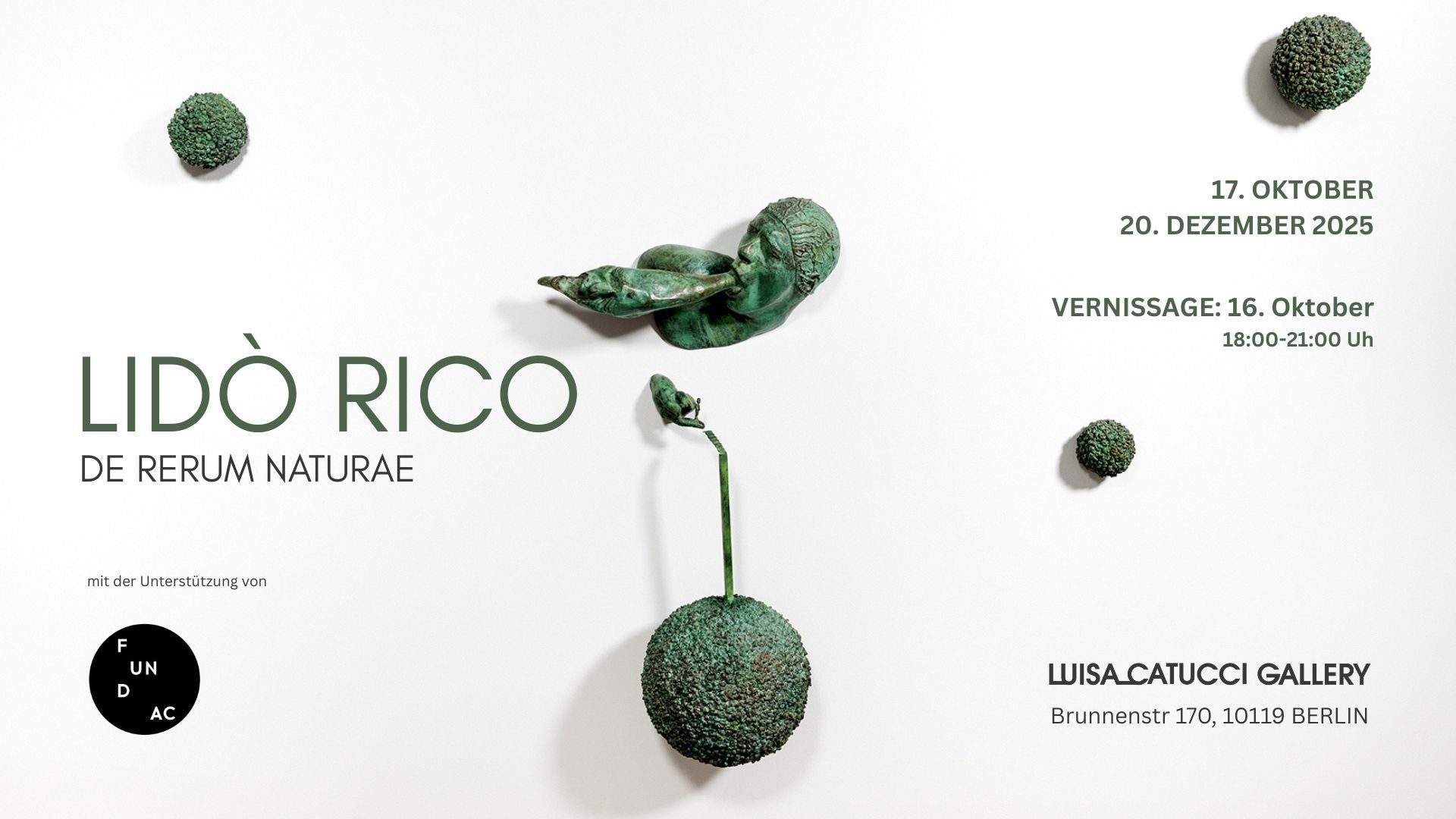
Lidò Rico – De Rerum Naturae
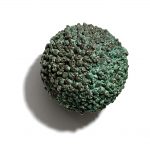
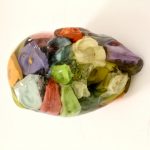
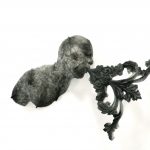
Lidó Rico’s De Rerum Naturae explores the human-nature connection, inspired by Lucretius. The work questions anthropocentric views, encouraging us to see human existence as part of, rather than above or separate from, the natural order.
Comunicato stampa
Segnala l'evento
Lidó Rico’s "De Rerum Naturae" is a profound exploration of the intrinsic relationship between humans and the natural world, inspired by Lucretius’s ancient philosophical treatise that advocates for understanding the universe through its physicality.
Rico’s work interrogates our collective perception of nature and challenges the anthropocentric worldview that has long defined human existence as separate from or superior to the natural order.
In this exhibition, Rico moves beyond the materiality of his chosen techniques—liquid resins poured into
silicone moulds, some cast from his own body, others from brains donated by the University of Murcia—delving into a critical revision of Western humanism from a post-humanist perspective. His oeuvre inhabits an interstitial space, blurring the boundaries between the human and the non-human, the natural and the artificial. These works evoke a destabilization of dualisms, unveiling the violence embedded within a society driven by relentless productivity, technological dependency, and a deep-seated fatigue—a reflection of contemporary alienation.
At its core, "De Rerum Naturae" entails a critical reflection on the modern human—a creature born from natural processes but increasingly alienated from its biological roots. Rico’s work confronts the ecological and existential implications of this disconnection. His figures—embodying fragile heads, brains embedded with technological implants, and distorted faces—are emblematic of a humanity caught between its natural origins and the artificial systems of control, productivity, and technological dependency that threaten to sever it from its essential biological nature.
Rico’s sculptures serve as visceral metaphors of the systemic violence inflicted by the society of continuous performance. His work confronts the viewer with the collective trauma of an epoch where mental health issues—such as ADHD, burnout, and neurodegenerative diseases—manifest as symptoms of an exhausted soul crushed by the weight of a hyper-efficient society.
This society, no longer organized by the disciplinary spaces of Foucault’s surveillance (hospitals, prisons, factories), has transformed into a “society of performance,” where the individual internalizes both the mandate and the self-exploitation—turning the subject into its own oppressor. Rico’s work captures this internalization, illustrating how the modern psyche is entrapped in a cycle of self-imposed pressure, manifesting in symptoms of depression, fatigue, and existential crisis.
The influence of Lucretius reminds us that the universe is an endless process of transformation—an ongoing alchemy—where matter and spirit continuously dissolve and reconfigure. Rico’s sculptures embody this dynamic, acting as memento mori for a species that, in its hubris, has forgotten its material roots.
By focusing on the corporeal and psychological trauma embodied in his sculpture, Lidó Rico exposes the violence of relentless pursuit of productivity and efficiency. His bodies are not mere representations but sites of internal conflict, reflecting a collective fatigue and a fracture within the human condition, intertwined with the ecological and social crises of our time. His pieces, with their raw materiality and confrontational presence, compel us to confront our own vulnerability and to rethink the boundaries separating us from non-human nature and technology.
“De Rerum Naturae" invites us to reconsider our understanding of ecological and ontological interconnectedness, urging a move beyond the illusions of mastery and control. It underscores an urgent need to embrace a new narrative—one that recognizes our co-evolution with the natural world, that perceives transformation as the fundamental condition of existence, and that deconstructs the ideologies underpinning modern humanism.
Lidó Rico is a contemporary Spanish artist recognized for his multidisciplinary practice that explores the boundaries between biological material, technology, and sculpture. Born in Murcia, Spain, Rico often employs techniques such as casting organic forms from his own body and biological deposits, incorporating new technologies like implants and digital tools. His work critically examines themes of human fragility, trauma, ecological crisis, and the relationship between humans and nature. Rico’s installations and sculptures have been exhibited widely across Europe and are part of notable collections, including Fundación La Caixa, Colección Iberdrola, and the Museo Reina Sofía. His art challenges perceptions of identity and materiality, fostering reflection on societal and environmental issues of our time.
Rico’s work interrogates our collective perception of nature and challenges the anthropocentric worldview that has long defined human existence as separate from or superior to the natural order.
In this exhibition, Rico moves beyond the materiality of his chosen techniques—liquid resins poured into
silicone moulds, some cast from his own body, others from brains donated by the University of Murcia—delving into a critical revision of Western humanism from a post-humanist perspective. His oeuvre inhabits an interstitial space, blurring the boundaries between the human and the non-human, the natural and the artificial. These works evoke a destabilization of dualisms, unveiling the violence embedded within a society driven by relentless productivity, technological dependency, and a deep-seated fatigue—a reflection of contemporary alienation.
At its core, "De Rerum Naturae" entails a critical reflection on the modern human—a creature born from natural processes but increasingly alienated from its biological roots. Rico’s work confronts the ecological and existential implications of this disconnection. His figures—embodying fragile heads, brains embedded with technological implants, and distorted faces—are emblematic of a humanity caught between its natural origins and the artificial systems of control, productivity, and technological dependency that threaten to sever it from its essential biological nature.
Rico’s sculptures serve as visceral metaphors of the systemic violence inflicted by the society of continuous performance. His work confronts the viewer with the collective trauma of an epoch where mental health issues—such as ADHD, burnout, and neurodegenerative diseases—manifest as symptoms of an exhausted soul crushed by the weight of a hyper-efficient society.
This society, no longer organized by the disciplinary spaces of Foucault’s surveillance (hospitals, prisons, factories), has transformed into a “society of performance,” where the individual internalizes both the mandate and the self-exploitation—turning the subject into its own oppressor. Rico’s work captures this internalization, illustrating how the modern psyche is entrapped in a cycle of self-imposed pressure, manifesting in symptoms of depression, fatigue, and existential crisis.
The influence of Lucretius reminds us that the universe is an endless process of transformation—an ongoing alchemy—where matter and spirit continuously dissolve and reconfigure. Rico’s sculptures embody this dynamic, acting as memento mori for a species that, in its hubris, has forgotten its material roots.
By focusing on the corporeal and psychological trauma embodied in his sculpture, Lidó Rico exposes the violence of relentless pursuit of productivity and efficiency. His bodies are not mere representations but sites of internal conflict, reflecting a collective fatigue and a fracture within the human condition, intertwined with the ecological and social crises of our time. His pieces, with their raw materiality and confrontational presence, compel us to confront our own vulnerability and to rethink the boundaries separating us from non-human nature and technology.
“De Rerum Naturae" invites us to reconsider our understanding of ecological and ontological interconnectedness, urging a move beyond the illusions of mastery and control. It underscores an urgent need to embrace a new narrative—one that recognizes our co-evolution with the natural world, that perceives transformation as the fundamental condition of existence, and that deconstructs the ideologies underpinning modern humanism.
Lidó Rico is a contemporary Spanish artist recognized for his multidisciplinary practice that explores the boundaries between biological material, technology, and sculpture. Born in Murcia, Spain, Rico often employs techniques such as casting organic forms from his own body and biological deposits, incorporating new technologies like implants and digital tools. His work critically examines themes of human fragility, trauma, ecological crisis, and the relationship between humans and nature. Rico’s installations and sculptures have been exhibited widely across Europe and are part of notable collections, including Fundación La Caixa, Colección Iberdrola, and the Museo Reina Sofía. His art challenges perceptions of identity and materiality, fostering reflection on societal and environmental issues of our time.
16
ottobre 2025
Lidò Rico – De Rerum Naturae
Dal 16 ottobre al 20 dicembre 2025
arte contemporanea
Location
Luisa Catucci Gallery
Berlin, Brunnenstraße, 170
Berlin, Brunnenstraße, 170
Orario di apertura
tuesday to friday: 11:00 - 18:00
saturday: 12:00 - 17:00
Vernissage
16 Ottobre 2025, 6pm - 9pm
Autore
Curatore