Create an account
Welcome! Register for an account
La password verrà inviata via email.
Recupero della password
Recupera la tua password
La password verrà inviata via email.

-
- container colonna1
- Categorie
- #iorestoacasa
- Agenda
- Archeologia
- Architettura
- Arte antica
- Arte contemporanea
- Arte moderna
- Arti performative
- Attualità
- Bandi e concorsi
- Beni culturali
- Cinema
- Contest
- Danza
- Design
- Diritto
- Eventi
- Fiere e manifestazioni
- Film e serie tv
- Formazione
- Fotografia
- Libri ed editoria
- Mercato
- MIC Ministero della Cultura
- Moda
- Musei
- Musica
- Opening
- Personaggi
- Politica e opinioni
- Street Art
- Teatro
- Viaggi
- Categorie
- container colonna2
- Servizi
- Sezioni
- container colonna1



Ron Nagle – Phantom Banter
Gió Marconi Gallery is pleased to announce Ron Nagle. Phantom Banter, the first solo show in Italy dedicated to West Coast sculptor Ron Nagle, known for his refined small-scale ceramic sculptures.
Comunicato stampa
Condividi l'evento
Gió Marconi Gallery is pleased to announce Ron Nagle. Phantom Banter, the first solo show in Italy dedicated to West Coast sculptor Ron Nagle, known for his refined small-scale ceramic sculptures.
The exhibition marks his second presentation in the country, following his inclusion in The Encyclopedic Palace at the 55th Venice Biennale 2013, curated by Massimiliano Gioni.
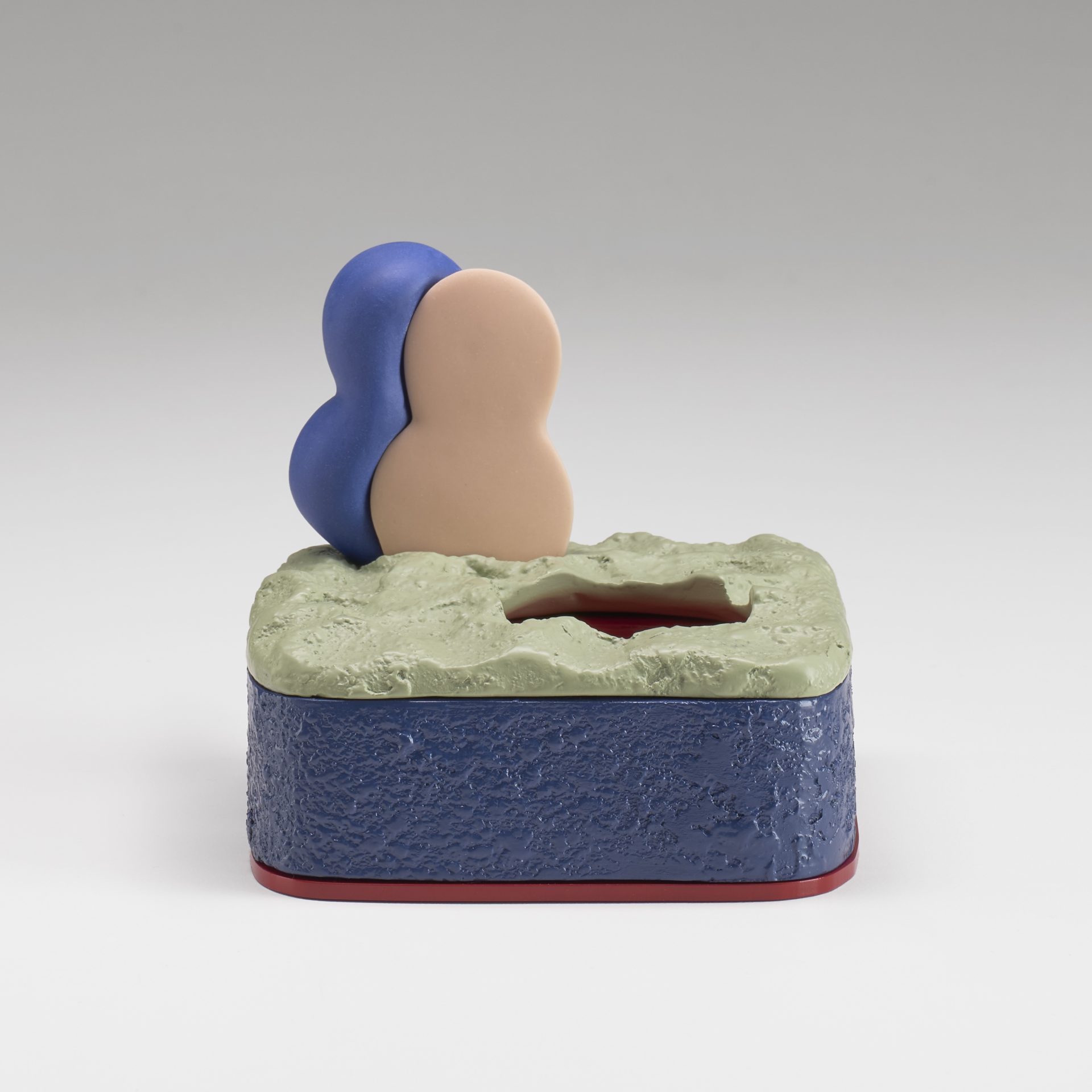
On view are eleven sculptures produced between 2024 and 2026, alongside a selection of recent drawings, offering an in-depth perspective on Nagle’s artistic research.
Born in 1939 in San Francisco, where he lives and works, Nagle began working in ceramics in the 1950s. In 1961 he apprenticed with Peter Voulkos at the University of California, Berkeley, entering an experimental environment that would lead to the development of the California Clay Movement. In this context, in close dialogue with artists such as Ken Price—who exerted a significant influence on him—Nagle quickly developed a personal visual language. From the outset, his work has been distinguished by its reduced scale and an extraordinary attention to surface, elements that have become defining features of his practice.
His sculptures, rarely exceeding six inches, are constructed from cast and fired ceramic elements, subsequently modified with resins and other synthetic materials that allow him to expand forms beyond the limits of clay. The process is oriented toward achieving specific visual effects: glossy or matte surfaces, granular textures, suspended drips, and layered color. Despite their three-dimensionality, Nagle consistently works “from a flat point of view,” conceiving the object as an image.
Within this process, drawing plays a central role and, since the 1990s, has almost systematically preceded the sculptural realization. Inspiration often emerges from everyday observations—bent trees, eroded rocks, splatters of chewed gum or graffiti—which are translated into rapid, sometimes automatic sketches. Rather than determining the color palette, these drawings define the rendering of form and volume.
Initially, Nagle produced these drawings primarily in black and white on yellow and pink lined pads; later, he began working on vellum, assigning drawing an increasingly decisive role in the creative process. After producing hundreds of drawings, he selects the most effective ones and, using a photocopier, adjusts their scale to identify the ideal dimension for three-dimensional translation.
Language operates on an autonomous level. The titles—constructed through wordplay, phonetic shifts, and free associations—do not describe the works nor provide a single interpretive key. Assigned a posteriori, they introduce an additional layer of ambiguity. This separation between object and title indirectly recalls Surrealist associative strategies and practices related to Man Ray, who made such procedures central to his artistic research.
This sensitivity to sound and the evocative potential of language is also connected to Nagle’s musical background. In addition to being a visual artist, he is a musician and songwriter: narrative, rhyme, and wordplay come naturally to him and are essential aspects of his personality.
Nagle’s work develops through a complex network of influences that never appear as quotations but instead function as integrated elements within a coherent system: on the one hand, the tradition of modern painting—Giorgio Morandi, Philip Guston, Josef Albers—and, on the other, Japanese ceramics of the Momoyama period and the aesthetics of wabi-sabi, which celebrate imperfect beauty. These are accompanied by elements drawn from postwar American popular culture: hot rods, with their lacquered surfaces and meticulous finishes, and the stucco architecture of San Francisco’s Mission District, characterized by vividly colored murals and grafitti.
This coexistence of references produces a continuous interplay between high and low, between artistic culture and everyday visual culture, operating within a uniquely personal form of pop-surrealist abstraction rooted in the artist’s interests and environment. Refined, stratified surfaces coexist with deliberately artificial effects; technical precision is combined with solutions that evoke the world of automotive design.
Over more than six decades, Nagle has progressively expanded his technical vocabulary, introducing industrial materials in pursuit of desired effects. The surface becomes the privileged site of investigation: airbrushing, automotive paints, and layering processes allow for an extremely precise control of color.
Ron Nagle (b. 1939) was born in San Francisco, where he currently lives and works. His first one-person exhibition took place in 1968, and since then he has had exhibitions at numerous museums, including the Saint Louis Art Museum, the Carnegie Museum of Art in Pittsburgh, the San Diego Museum of Art, the Museum Boijmans Van Beuningen in Rotterdam, the Secession in Vienna, the Fridericianum in Kassel, and the Berkeley Art Museum. In 2013 his work was included in the exhibition “The Encyclopedic Palace” at the 55th Venice Biennale. Nagle is also a musician, and a deluxe edition of his acclaimed 1970 album Bad Rice was released on Omnivore Recordings in 2015. Nagle continues to write and produce music.
The exhibition marks his second presentation in the country, following his inclusion in The Encyclopedic Palace at the 55th Venice Biennale 2013, curated by Massimiliano Gioni.
On view are eleven sculptures produced between 2024 and 2026, alongside a selection of recent drawings, offering an in-depth perspective on Nagle’s artistic research.
Born in 1939 in San Francisco, where he lives and works, Nagle began working in ceramics in the 1950s. In 1961 he apprenticed with Peter Voulkos at the University of California, Berkeley, entering an experimental environment that would lead to the development of the California Clay Movement. In this context, in close dialogue with artists such as Ken Price—who exerted a significant influence on him—Nagle quickly developed a personal visual language. From the outset, his work has been distinguished by its reduced scale and an extraordinary attention to surface, elements that have become defining features of his practice.
His sculptures, rarely exceeding six inches, are constructed from cast and fired ceramic elements, subsequently modified with resins and other synthetic materials that allow him to expand forms beyond the limits of clay. The process is oriented toward achieving specific visual effects: glossy or matte surfaces, granular textures, suspended drips, and layered color. Despite their three-dimensionality, Nagle consistently works “from a flat point of view,” conceiving the object as an image.
Within this process, drawing plays a central role and, since the 1990s, has almost systematically preceded the sculptural realization. Inspiration often emerges from everyday observations—bent trees, eroded rocks, splatters of chewed gum or graffiti—which are translated into rapid, sometimes automatic sketches. Rather than determining the color palette, these drawings define the rendering of form and volume.
Initially, Nagle produced these drawings primarily in black and white on yellow and pink lined pads; later, he began working on vellum, assigning drawing an increasingly decisive role in the creative process. After producing hundreds of drawings, he selects the most effective ones and, using a photocopier, adjusts their scale to identify the ideal dimension for three-dimensional translation.
Language operates on an autonomous level. The titles—constructed through wordplay, phonetic shifts, and free associations—do not describe the works nor provide a single interpretive key. Assigned a posteriori, they introduce an additional layer of ambiguity. This separation between object and title indirectly recalls Surrealist associative strategies and practices related to Man Ray, who made such procedures central to his artistic research.
This sensitivity to sound and the evocative potential of language is also connected to Nagle’s musical background. In addition to being a visual artist, he is a musician and songwriter: narrative, rhyme, and wordplay come naturally to him and are essential aspects of his personality.
Nagle’s work develops through a complex network of influences that never appear as quotations but instead function as integrated elements within a coherent system: on the one hand, the tradition of modern painting—Giorgio Morandi, Philip Guston, Josef Albers—and, on the other, Japanese ceramics of the Momoyama period and the aesthetics of wabi-sabi, which celebrate imperfect beauty. These are accompanied by elements drawn from postwar American popular culture: hot rods, with their lacquered surfaces and meticulous finishes, and the stucco architecture of San Francisco’s Mission District, characterized by vividly colored murals and grafitti.
This coexistence of references produces a continuous interplay between high and low, between artistic culture and everyday visual culture, operating within a uniquely personal form of pop-surrealist abstraction rooted in the artist’s interests and environment. Refined, stratified surfaces coexist with deliberately artificial effects; technical precision is combined with solutions that evoke the world of automotive design.
Over more than six decades, Nagle has progressively expanded his technical vocabulary, introducing industrial materials in pursuit of desired effects. The surface becomes the privileged site of investigation: airbrushing, automotive paints, and layering processes allow for an extremely precise control of color.
Ron Nagle (b. 1939) was born in San Francisco, where he currently lives and works. His first one-person exhibition took place in 1968, and since then he has had exhibitions at numerous museums, including the Saint Louis Art Museum, the Carnegie Museum of Art in Pittsburgh, the San Diego Museum of Art, the Museum Boijmans Van Beuningen in Rotterdam, the Secession in Vienna, the Fridericianum in Kassel, and the Berkeley Art Museum. In 2013 his work was included in the exhibition “The Encyclopedic Palace” at the 55th Venice Biennale. Nagle is also a musician, and a deluxe edition of his acclaimed 1970 album Bad Rice was released on Omnivore Recordings in 2015. Nagle continues to write and produce music.
29
maggio 2026
Ron Nagle – Phantom Banter
Dal 29 maggio al 24 luglio 2026
arte contemporanea
Location
Gió Marconi
Milano, Via Alessandro Tadino, 15, (MI)
Milano, Via Alessandro Tadino, 15, (MI)
Orario di apertura
da martedì a sabato ore 11-18
Vernissage
28 Maggio 2026, 12 - 20
Sito web
Ufficio stampa
Lara Faccio P&C
Autore